Optogenetic Gene Therapy: Nanoscope Announces FDA Acceptance of Biologics License Application for MOGENRY for the Treatment of Retinitis Pigmentosa
Nanoscope Therapeutics has announced that the U.S. Food and Drug Administration (FDA) has accepted and filed the Biologics License Application (BLA) seeking approval of MOGENRY® (sonpiretigene isteparvovec, MCO-010), an optogenetic gene therapy designed for vision restoration for patients with retinitis pigmentosa (RP) having severe vision loss.
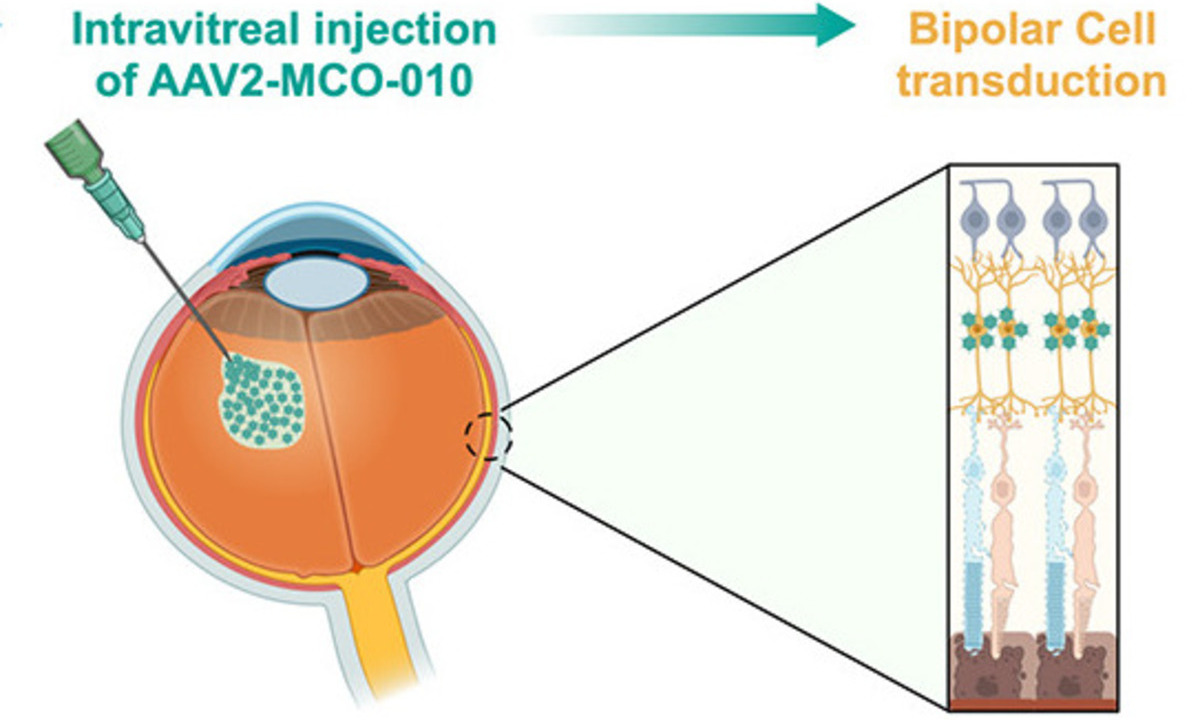
- If approved, MOGENRY would be the first gene-agnostic treatment available for patients with retinitis pigmentosa having severe vision loss
- BLA supported by positive RESTORE Phase 2b/3 data and REMAIN long-term follow-up data
“FDA acceptance and filing of our BLA for MOGENRY is a crucial milestone that brings us a critical step closer to offering a one-time, in-office treatment option to the retinitis pigmentosa community with severe vision loss, who have no approved therapy today,” said Sulagna Bhattacharya, Chief Executive Officer of Nanoscope Therapeutics. “The strength of our RESTORE data, together with the durability we have observed through long-term follow-up in the REMAIN study, give us confidence in MOGENRY’s potential to become a new standard of care for patients living with RP having severe vision loss. We look forward to working closely with the FDA throughout its review.”
RESTORE met primary and key secondary endpoints
The BLA is supported by positive efficacy and safety data from the Phase 1/2a trial (NCT04919473), and the RESTORE Phase 2b/3 multicenter, randomized, double-masked, sham-controlled clinical trial (NCT04945772). RESTORE met its primary and key secondary endpoints, demonstrating improvements in visual acuity at weeks 52 and 76. MOGENRY was well tolerated, with no treatment-related serious adverse events reported.
New era of RP treatment?
“Restoring vision is the most challenging metric to achieve in ophthalmic gene therapy — and MOGENRY seems to be clearing that bar, with years of improved vision alongside it. That combination makes this a milestone moment, not just for our patients with an unmet need and Nanoscope, but for our entire field. MOGENRY does not require genetic testing or administration in a surgical suite, which could enable broad adoption by community retina practices. If approved, MOGENRY could usher in a new era of RP treatment within reach of patients who do not have access to a tertiary academic center,” said Allen C. Ho, M.D., Professor of Ophthalmology, Thomas Jefferson University and Director of Retina Research, Wills Eye Hospital, and Chief Medical Advisor for Nanoscope Therapeutics.
Most patients dosed in RESTORE have continued into the REMAIN study, which provides long-term follow-up data in the BLA. If approved, MOGENRY would become the first gene-agnostic therapy to improve vision in patients with RP having severe vision loss.
Sustained effect for years
“As retina specialists, we’ve watched plenty of promising drug candidates fail to show, let alone sustain, benefits for patients. What sets MOGENRY apart is a meaningful benefit, with evidence of sustained effect for years. Long-term durability is exactly what physicians need to see in a one-time treatment and know their patients can truly rely on it,” said SriniVas Sadda, M.D., A. Ray Irvine, Jr., MD, Endowed Chair in Clinical Ophthalmology and Professor at the University of California, Los Angeles David Geffen School of Medicine and the Doheny Eye Institute, and Chair of Nanoscope’s Visionary Advisory Committee.
About MOGENRY (sonpiretigene isteparvovec, MCO-010)
Nanoscope’s multi-characteristic opsin (MCO) technology utilizes a proprietary genetically engineered synthetic opsin to enable optimized performance in terms of high light sensitivity across a broad spectrum and fast kinetics. After Nanoscope’s Co-Founder, President and Chief Scientific Officer, Samarendra Mohanty, envisioned and invented the technology, his team has spent over a decade evaluating its performance across multiple animal models and human diseases.
MOGENRY is an investigational, one-time, in-office, intravitreal optogenetic gene therapy built on Nanoscope’s MCO platform. By delivering a multi-characteristic opsin gene to the highly dense bipolar retinal cells, MOGENRY makes these surviving cells directly light-sensitive, enabling them to utilize the remaining visual circuitry following photoreceptor loss. MOGENRY does not require genetic testing, invasive surgery, or repeat dosing, and is designed for administration within existing retina office workflows.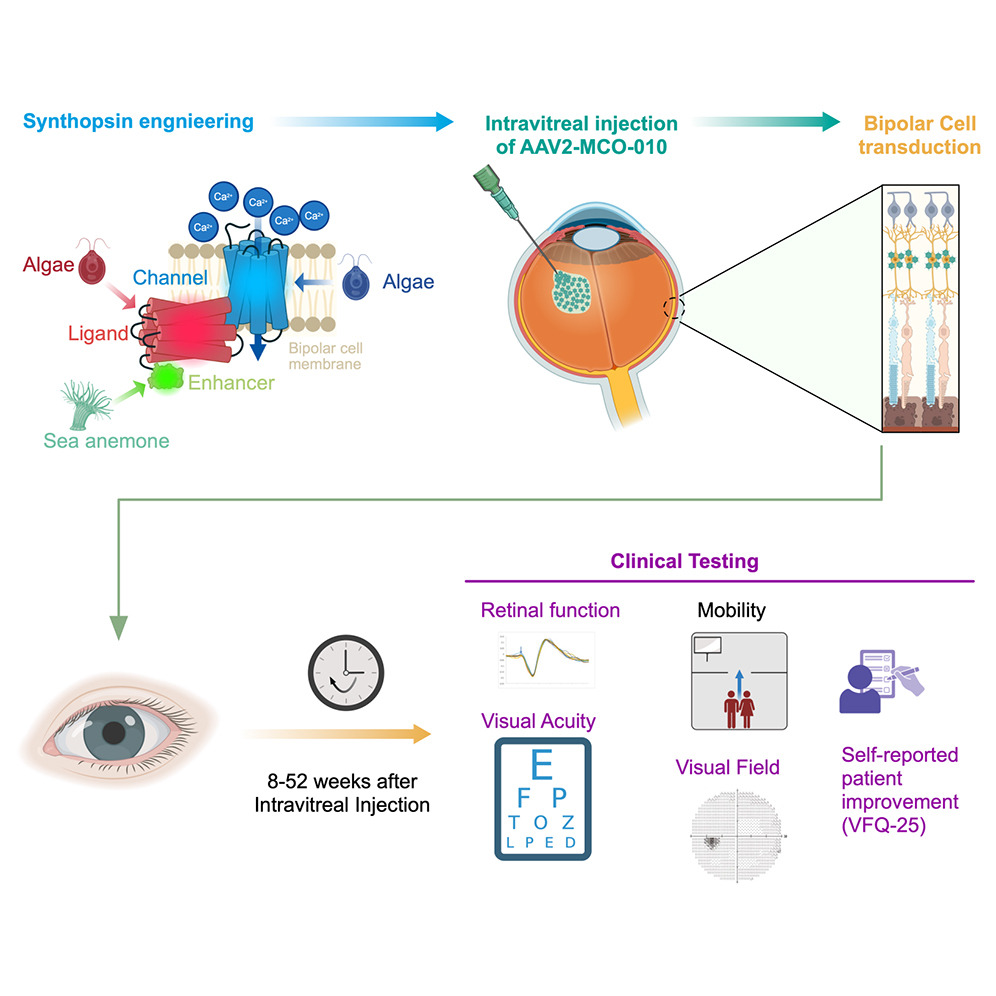
About Nanoscope Therapeutics
Nanoscope Therapeutics is developing disease-agnostic, vision-restoring optogenetic therapy for millions of patients blinded by retinal degenerative diseases. Following positive results from the RESTORE Phase 2b/3 multicenter, randomized, double-masked, sham-controlled clinical trial for RP (NCT04945772), the FDA has accepted and filed the Company’s BLA for MOGENRY.
The Company has also shown promising results in the STARLIGHT Phase 2 clinical trial of MCO-010 in Stargardt disease (SD) (NCT05417126) and plans to initiate a Phase 3 registrational trial in 2026. MCO-010 has received FDA Fast Track and Orphan Drug designations for both RP and SD, along with RMAT designation for SD, and EMA Orphan designations covering non-syndromic and syndromic rod- and cone-dominant dystrophies, as well as macular dystrophies. MCO-010 has also received Sakigake and Orphan designations for inherited retinal dystrophies (IRDs) in Japan and an Orphan designation for IRDs in Saudi Arabia. A Phase 2 program for MCO in geographic atrophy is expected to start in 2026, and other IND-ready programs include Leber congenital amaurosis (LCA).