Aniridia-Related Keratopathy: New Stem Cell Treatment Improves Vision
A new breakthrough stem cell treatment for aniridia-related keratopathy (ARK) has seen patients’ vision improve for this previously untreatable rare genetic eye condition in a first-in-human clinical trial at Moorfields Eye Hospital and the UCL Institute of Ophthalmology, published in JAMA Ophthalmology.
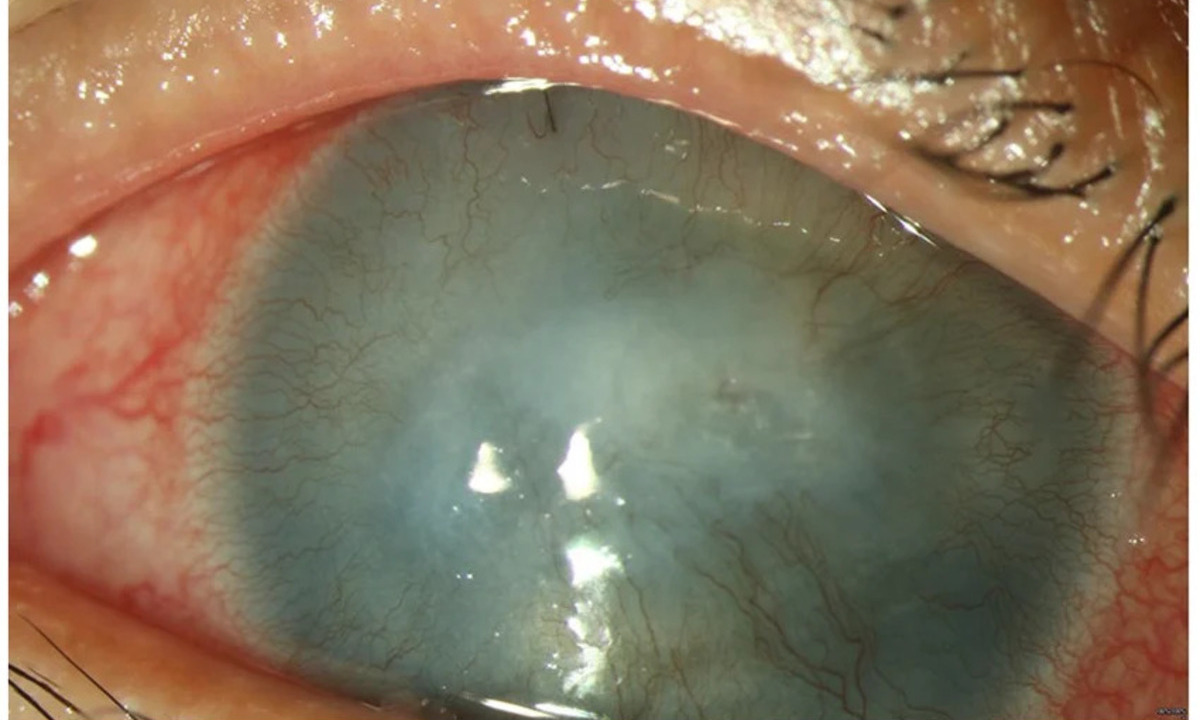
Aniridia is a surface disorder affecting the limbal stem cells, which form the border between the sclera and cornea. It is mostly an inherited genetic eye development disease, resulting in profound visual loss.
ARK is a progressive form of aniridia that leads to a deficiency of limbal stem cells, affecting one in 40,000 to 100,000 of the population. It leads to conjunctival tissue growing over the cornea, turning the eye opaque and forming a thickening layer that gradually worsens vision. It results from a mutation of the PAX6 gene.
Collagen scaffold
For the first time, the Moorfields team developed a collagen scaffold. This was tissue-engineered to deliver limbal epithelial stem cells and stromal stem cells to treat the affected area. One eye obtained this intervention, the other did not, and acted as a control.
The nine patients in the trial started with an average OSS (ocular surface score, to assess the state of the eye’s surface) of 9.4 in the treated eye, 8.4 in the untreated. (Scores of 0-5 are classified as mild, 6-10 moderate and 11-15 severe). The treated eyes improved to 5.9 after three months (6.7 after twelve), while the untreated ones had changed very little, being 8.0 after twelve months. Importantly, their ETDRS (early treatment diabetic retinopathy study) score had also improved, by an average of 24 letters, or almost five lines of a standard vision chart. There were no substantial safety concerns compared with untreated fellow eyes.
Larger clinical trial
Professor Sajjad Ahmad, consultant ophthalmic surgeon at Moorfields Eye Hospital and professor of corneal regeneration at the UCL Institute of Ophthalmology said: “This is the first-ever optical use of a collagen scaffold containing two types of stem cells and has proved effective for a previously untreatable progressive condition leading to sight loss. We are now looking to take this forward to a larger clinical trial, with a view to this being accepted as an NHS treatment.”
This research was made possible by funding from Medical Research Council, Moorfields Eye Charity and the NIHR Biomedical Research Centre at Moorfields Eye Hospital.
Kaye AE, Morgan L, Shah R, et al. Combined Limbal Epithelial and Stromal Cell Transplant for Aniridia-Related Keratopathy: A Nonrandomized Clinical Trial. JAMA Ophthalmol. Published online July 23, 2026. doi:10.1001/jamaophthalmol.2026.2701