„A new genetic cause of retinitis pigmentosa“ – IOB researchers Carlo Rivolta and Mathieu Quinodoz identify non-coding RNA variants
Up to 40% of retinitis pigmentosa cases remain genetically unexplained. In this interview, IOB researchers Carlo Rivolta and Mathieu Quinodoz explain how variants in non-coding RNA genes can cause retinitis pigmentosa and account for a share of previously unsolved cases. They discuss implications for diagnosis, genetic counselling and why targeting RNA processing may open new therapeutic avenues.
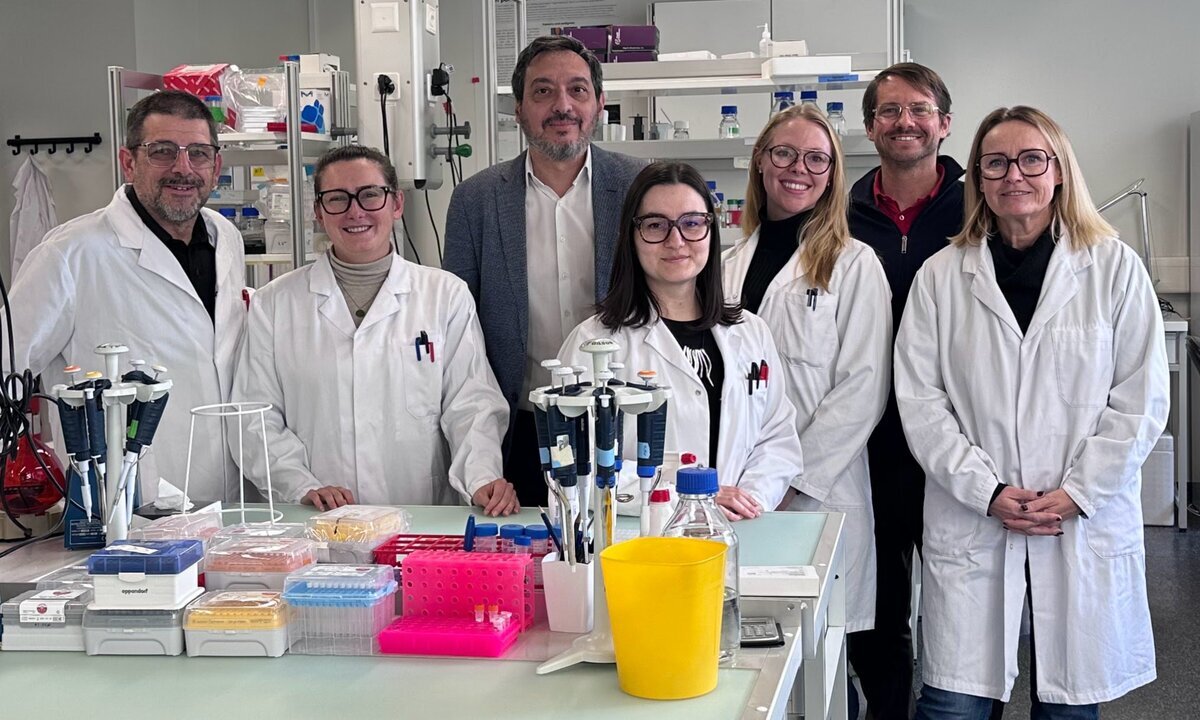
Researchers from the Ophthalmic Genetics Group at the Institute of Molecular and Clinical Ophthalmology Basel (IOB), in collaboration with a team from Radboud University Medical Center,Nijmegen, and partners from more than 100 institutions worldwide, analyzed genetic data from nearly 5,000 individuals across 62 families affected by retinitis pigmentosa (RP) and identified a new genetic cause of inherited blindness. The team discovered mutations in non-coding RNA genes that explain previously undiagnosed cases of RP, opening new diagnostic avenues for thousands of patients.
Carlo Rivolta
Carlo Rivolta is Head of the Ophthalmic Genetics Group at the Institute of Molecular and Clinical Ophthalmology Basel and Professor of Ophthalmic Genetics at the University of Basel. In addition, he is Professor and Chair of Medical Genetics at the University of Leicester. His research focuses on the genetic basis of inherited retinal diseases.
Mathieu Quinodoz
Mathieu Quinodoz is Senior Scientist in the Ophthalmic Genetics Group at the Institute of Molecular and Clinical Ophthalmology Basel and first author of the study. He holds a Master’s degree in Bioengineering (systems biology) from EPFL and a PhD in Life Sciences from University of Lausanne. His work combines bioinformatics and molecular biology, including the analysis of NGS, RNA-Seq and ChIP-Seq data across projects on rare retinal diseases and other conditions.
What central question was the starting point of your study?
Carlo Rivolta & Mathieu Quinodoz: Many people with retinitis pigmentosa (RP), a disease affecting the retina, still do not receive a clear genetic explanation for their disease, even after advanced DNA sequencing. Most genetic analyses focus on genes that contain instructions for making proteins, which are the main building blocks of cells.
Our starting question was therefore simple: could disease-causing changes in genes that do not make proteins, but instead produce RNA molecules, explain a meaningful number of these unsolved cases of inherited RP?
What are the key findings of your research?
We identified a new genetic cause of RP in genes that produce RNA rather than proteins. We found repeated disease-causing changes in two of such RNA genes, called RNU4-2 and RNU6, in people with typical, non-syndromic RP. These changes were seen both in families and in individuals in whom the mutation appeared for the first time.
In addition, these genetic changes all affect the same critical part of the cell’s RNA processing machinery, which is essential for correctly reading genetic instructions. This suggests that RP can arise when this machinery does not work properly.
Finally, these RNA gene variants can explain about 1 to 2 percent of previously unexplained RP cases. While this may sound small, it is a significant contribution in a disease where many cases remain unsolved.
Do these forms of RP differ clinically from RP caused by mutations in protein-coding genes?
Overall, these patients have typical RP, but their disease course closely resembles other RP forms caused by defects in RNA processing. Compared with many other inherited RP types, the disease may begin somewhat earlier and it seems to be more often accompanied by cataracts. Otherwise, it does not present as a separate or unusual clinical entity.
What connections did you identify between retinal diseases and neurodevelopmental disorders?
We found that the same RNA gene, RNU4-2, can be involved in very different diseases. Some genetic changes in this gene cause a neurodevelopmental disorder, while others cause retinal degeneration. Importantly, these changes affect different parts of the RNA molecule and likely disrupt cellular function in different ways. This shows how subtle differences in the same gene can lead to very different outcomes in the body.
How does studying overlooked, non-protein-coding regions open new diagnostic avenues, and what does this mean for patients?
Most genetic testing focuses almost entirely on protein-coding genes. However, the human genome contains more non-protein-coding genes than protein coding genes, which means that many potential DNA sequences linked to hereditary blindness are often overlooked.
For patients, this means: More people may finally receive a clear genetic diagnosis after years of uncertainty.
Genetic counselling improves, especially because some patients with no family history carry new dominant mutations that can still be passed on to children.
What are the implications for future therapies?
These findings suggest that new treatment strategies will be needed for this form of RP. Simply adding a healthy gene copy, a strategy used in some genetic eye diseases, is unlikely to work here.
Instead, future treatments may aim to correct or reduce the harmful genetic signal itself or help cells process genetic instructions more accurately. More broadly, the study shows that targeting fundamental cellular processes, rather than single genes alone, may open new and more flexible therapeutic possibilities for patients with retinitis pigmentosa.
Interview: Achim Drucks
Original Publication: Quinodoz, M., Rodenburg, K., Cvackova, Z. et al. De novo and inherited dominant variants in U4 and U6 snRNA genes cause retinitis pigmentosa. Nat Genet 58, 169–179 (2026). https://doi.org/10.1038/s41588-025-02451-4