AMD: New laser treatment the first to halt disease’s progression?
A non-damaging laser treatment with electroretinography-based thermal dosimetry for age-related macular degeneration (AMD) will start clinical trials in Finland next spring – Aalto University researchers hope it could be available to patients in as little as three years.
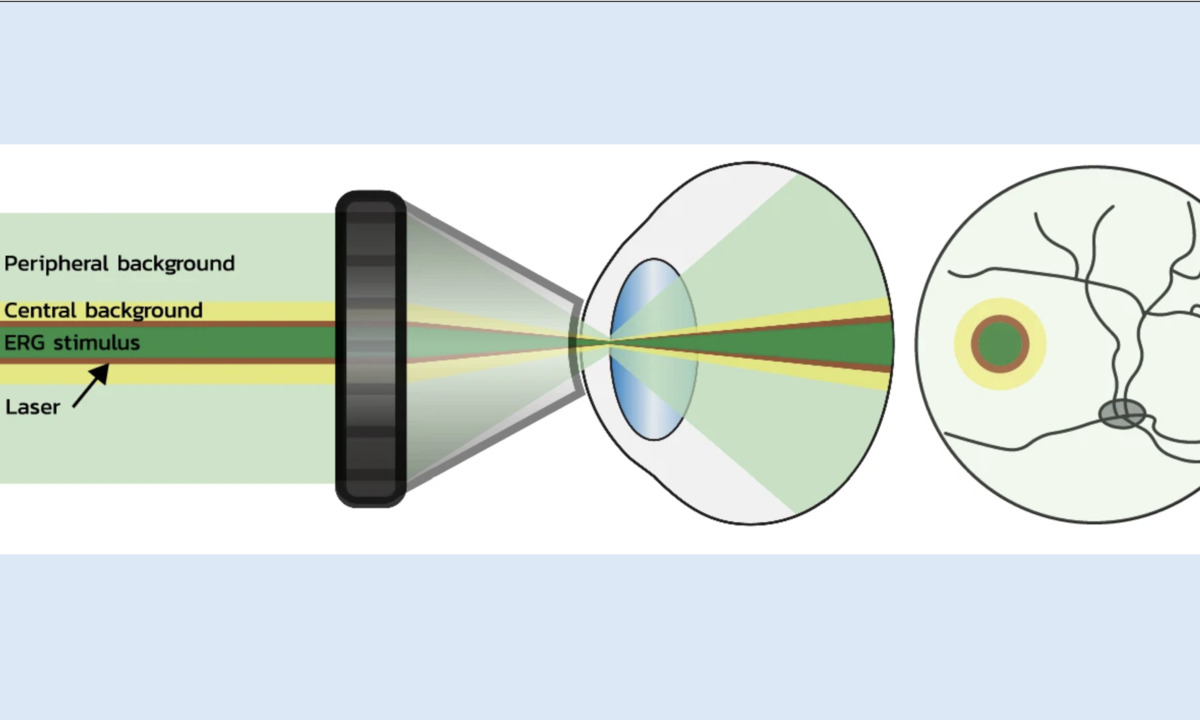
Aalto University researchers have uncovered a promising way to treat the dry form of age-related macular degeneration (AMD) in the early diagnosis phase that could potentially stop its progression. The novel treatment approach aims to strengthen the protective mechanisms of affected cells using heat, explains Professor Ari Koskelainen, who led the research.
‘Cellular functionality and protective mechanisms weaken with age, which exposes the fundus to intense oxidative stress,’ he explains. ‘Free oxygen radicals damage proteins, which causes them to misfold and aggregate, then fatty protein deposits called drusen begin to accumulate, which is the main diagnostic criterion for the dry form of age-related macular degeneration.’
The new approach requires heating the tissue by several degrees, which is complicated, as it’s hard to measure the temperature behind the retina, and temperatures above 45 degrees Celsius can cause tissue damage. The newly developed focal electroretinography (fERG)-based method allows retinal temperature monitoring during laser exposure. Koskelainen says, amongst other benefits, it harnesses the power of heat to trigger healing responses at a cellular level. Applying the method to anaesthetized male pigs in vivo, the researchers were able to study the biological effects of controlled retinal hyperthermia.
Misfolded proteins can be treated in three different ways. Heat shock proteins, which are produced by cells in response to environmental stress, can repair them to their original shape. If this does not work, the misfolded proteins are primarily directed to be broken down into amino acids.
If accumulations have already formed, a process called autophagy comes into play, the discovery of Yoshinori Ohsumi, who was awarded the Nobel Prize in Medicine for the discovery in 2016. In this process, a lipid membrane similar to a cell membrane is built around the accumulation, with recognition proteins on its surface. With the help of these proteins, lysosomal enzymes begin to break down aged and damaged proteins.
The findings reveal that temperature elevation to 44 °C with 60-second laser exposure triggers heat shock protein production and autophagy activation in RPE/choroid while avoiding oxidative stress, apoptosis, and structural damage. The results demonstrate that visible lesions occur at temperatures above 48 °C, and that the temperature determination precision was 0.6 °C. These outcomes highlight that fERG-controlled retinal laser treatment enables reliable and safe activation of cytoprotective mechanisms in the RPE, providing a promising new therapeutic approach.
‘We were able to show that we can activate not only the production of the heat shock proteins, but also autophagy using the heat shocks. This process is similar to waste disposal,’ says Koskelainen.
The method has been shown to work in mice and pigs, and patient trials will start in Finland in spring 2026. The first phase of the trials will ensure the safety of the treatment approach in humans, without yet seeking a therapeutic response. Researchers then hope to progress towards establishing how often the treatment would need to be repeated.
‘The treatment needs to be repetitive, since the response can already begin to decline some days after the treatment,’ Koskelainen says.
The research was first published in Nature Communications on 29 October. Meanwhile, researchers aim to commercialise the discovery, and have established a research-to-business start-up called Maculaser.
‘An optimistic schedule would see the method already being used in hospital eye clinics in as little as three years’ time,’ says Koskelainen. ‘The eventual goal is that it would be readily available at your local ophthalmologist.’
Amirkavei, M., Kaikkonen, O., Turunen, T. et al. Non-damaging laser treatment with electroretinography-based thermal dosimetry activates hormetic heat response in pig retinal pigment epithelium. Nat Commun 16, 9533 (2025). https://doi.org/10.1038/s41467-025-64095-6
Source: Aalto University