Infrared light for blind retina: Engineered human channels open a new path
Researchers at IOB and collaborators from the Semmelweis University, Budapest, show how a redesigned human TRPV1 ion channel makes a blind human retina responsive to safe infrared light, without using foreign proteins or nanoparticles.
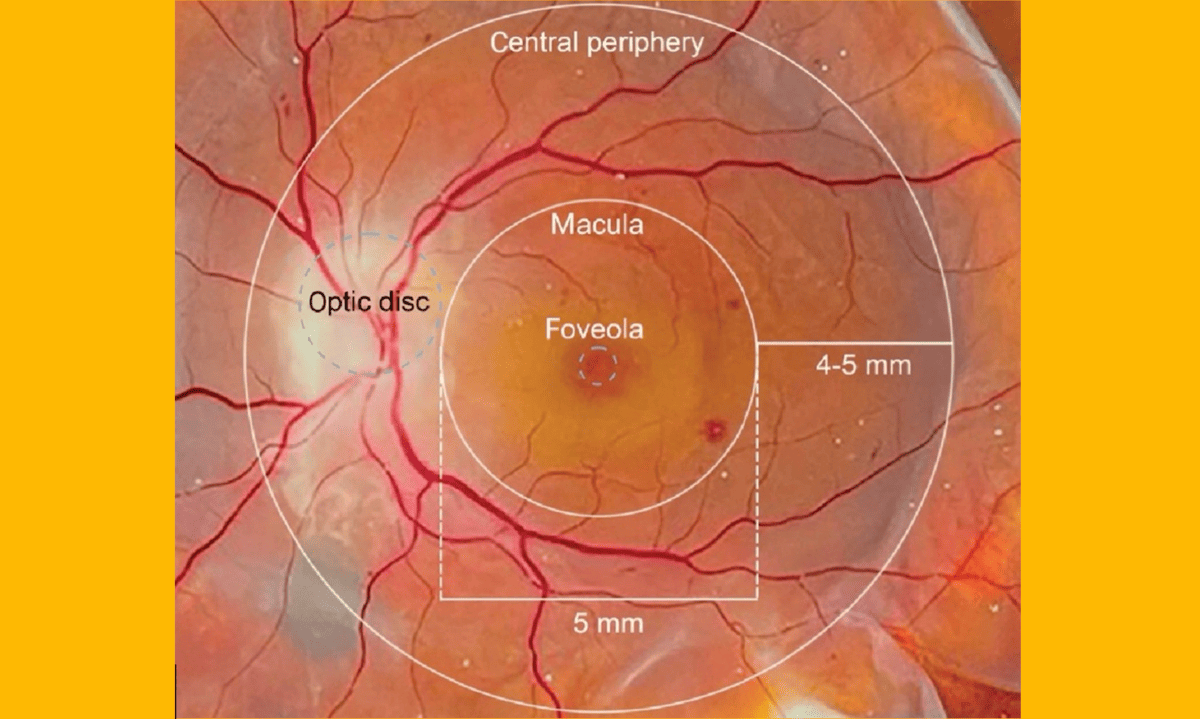
Restoring vision in retinal degeneration is a major biomedical challenge. In this study, IOB scientists engineered an ultrasensitive variant of the human TRPV1 channel, delivered by an AAV vector, that responds to near-infrared microheating.
When expressed in blind human retinal tissue, this single-component system triggers robust ganglion cell responses, restoring light sensitivity without the need for microbial proteins or nanoparticles.
Beyond vision restoration, this work highlights how precise protein engineering can adapt native human ion channels for remote control of excitable cells. This concept opens new opportunities for therapeutic applications and expands the possibilities of thermal neuromodulation across neuroscience and medicine.
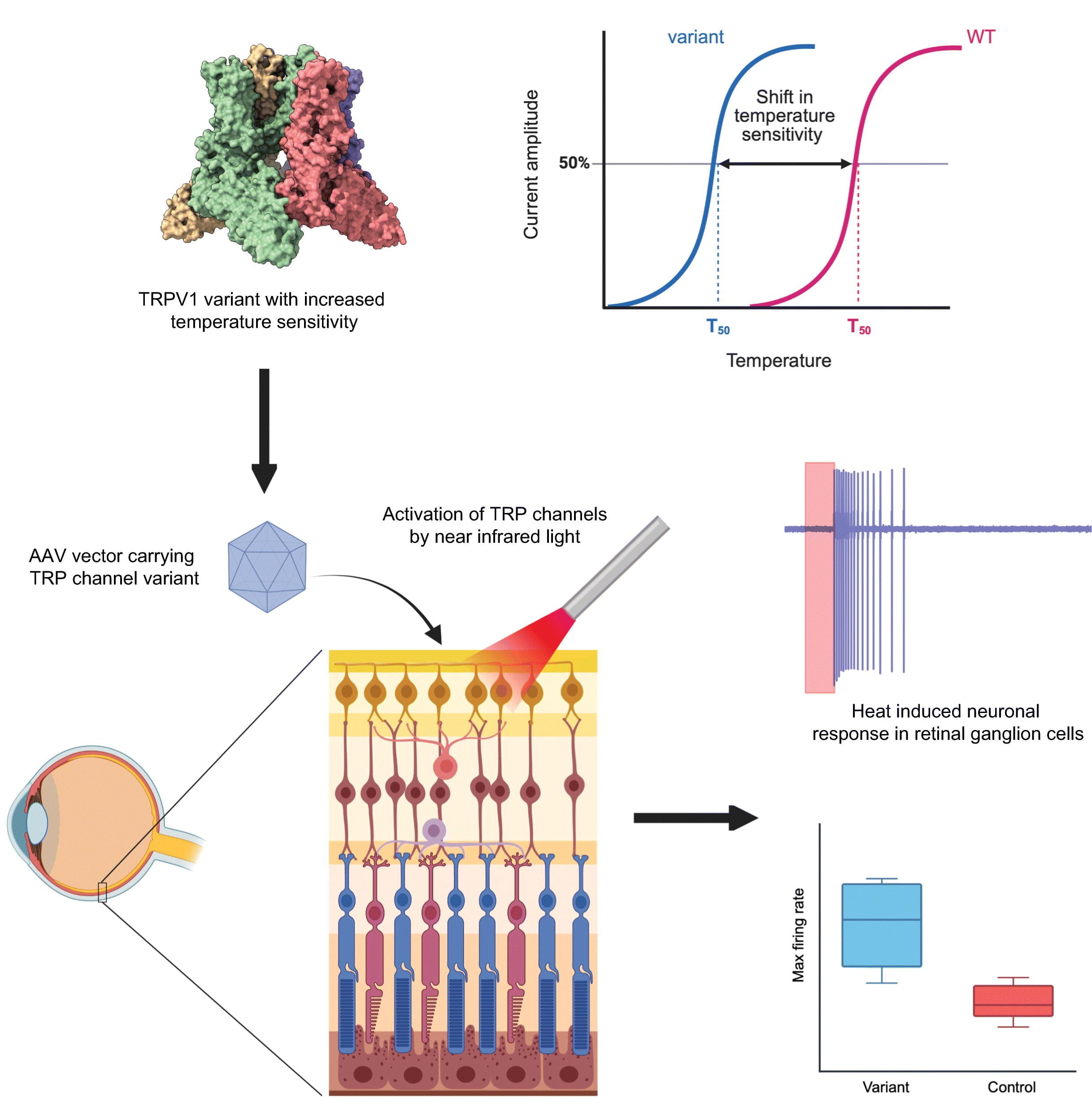
Graphical abstract. Image: Chevalier, Morgan et al., Trends in Biotechnology
Source: IOB
Engineering infrared light detection in blind human retina using ultrasensitive human TRPV1 channels, Chevalier, Morgan et al., Trends in Biotechnology